Assyrtiko de France
First published in the Wine Campus Journal
11 August 2026
As Yiannis Paraskevopoulos of Gaia fame put it: “We’ve reached the day when a Frenchman is advising another Frenchman to plant Assyrtiko.”
A generation ago, that observation would have sounded absurd. France has spent centuries teaching the world about wine. Greece, despite its ancient wine culture, has more often looked to France than the other way around. Yet today, French growers are seriously considering one of Greece’s most distinctive grape varieties as part of their future.
A Frenchman looking to a Greek grape to help shape French wine. Who would have thought? And yet, the explanation seems perfectly straightforward. It’s climate change.
Assyrtiko thrives in heat. The variety retains acidity where many others struggle. It tolerates drought and produces wines with remarkable freshness despite high summer temperatures. As southern Europe warms, it is hardly surprising that growers are exploring grape varieties better adapted to the conditions ahead.
Meanwhile, the grape is being closely monitored by French research programmes, including Bordeaux’s VitAdapt project under the supervision of the INAO. While it is true that most Assyrtiko plantings are agronomic trials for now, there are already commercial bottlings available too. At Château La Roque in Pic Saint-Loup, for example, Assyrtiko has already shown itself capable of enduring heatwaves significantly better than local varieties such as Vermentino and Grenache.
But no matter how obvious it seems, climate alone doesn’t explain why Assyrtiko has captured so much attention. After all, there are plenty of grape varieties capable of surviving hotter vineyards. Few have generated the same excitement.
Why this one?
By conventional consumer logic, Assyrtiko hardly seems the ideal candidate for international success. Its wines are naturally high in acidity, generous in alcohol and rarely soft or immediately charming. It is not a grape that has become successful by trying to please everyone. Au contraire, Assyrtiko asks for a special effort from the drinker, and not just getting your tongue around its name.
And that’s where another story comes to mind. Didn’t Champagne follow a remarkably similar path?
Long before it became synonymous with celebration and luxury, Champagne produced lean, acidic wines in one of France’s coolest wine regions, where grapes struggled to ripen fully. Sparkling wine itself was initially regarded as a fault rather than a virtue. Bottles exploded unpredictably. The wines challenged accepted ideas of quality. Nothing about early Champagne suggested it would one day become the world’s most recognisable luxury wine.
Champagne’s success was never just about what was in the bottle. The real trick was getting people to want it, and the French became extraordinarily good at that. Merchants brought Champagne to market, writers shaped opinion and restaurateurs turned it into a ritual rather than simply another sparkling wine. The great houses, from Moët & Chandon and Ruinart to Veuve Clicquot, built an image of Champagne as a luxury for the few, and price became part of the allure. The wine itself was able to piggyback on that perception of luxury, becoming something people aspired to drink.
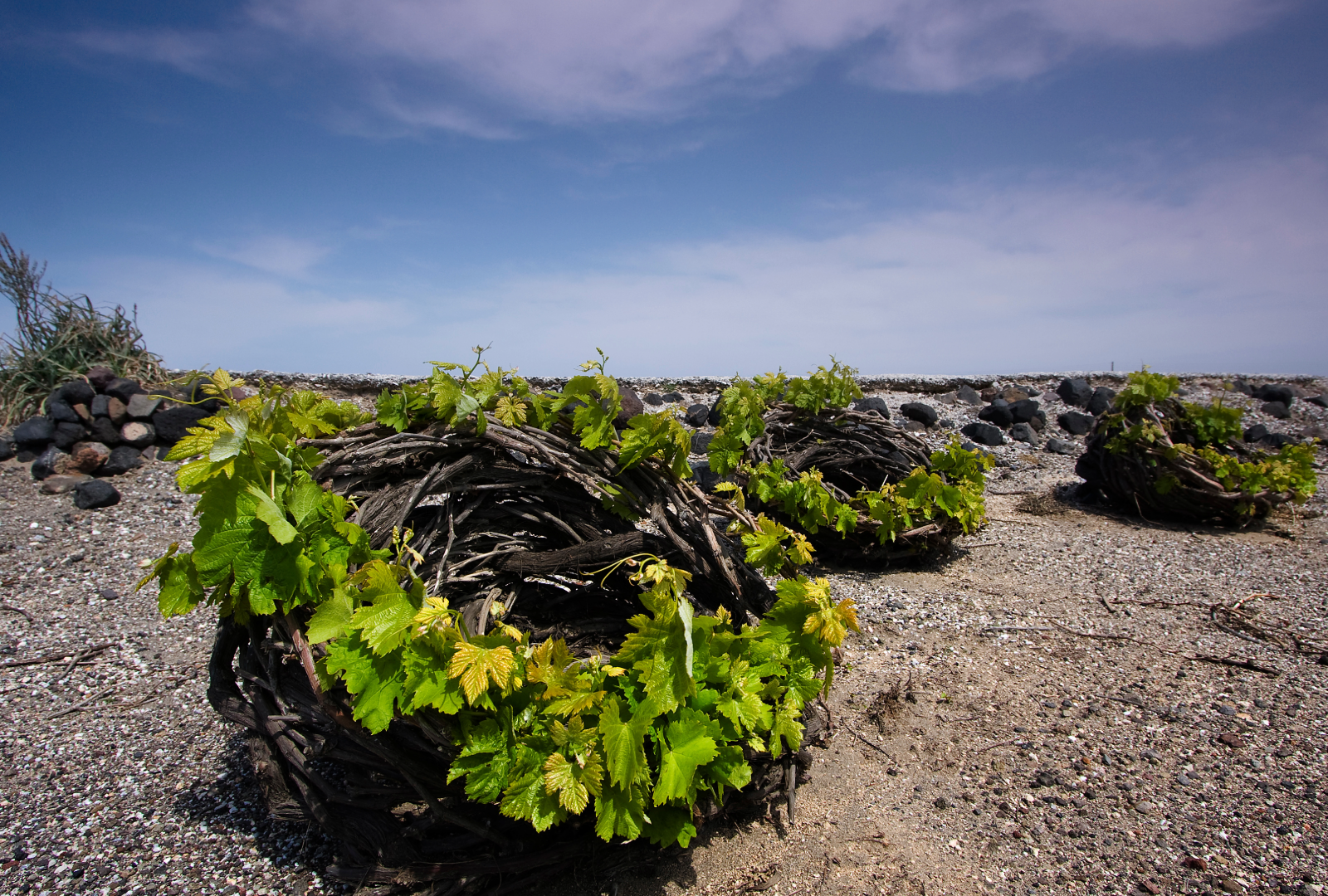
Assyrtiko has caught much the same wind in its sails. Its high acidity, distinctive character and demanding personality have hardly been softened to make it more acceptable. Instead, Santorini did much of the selling. The image of the idyllic Greek island, its popularity with the international jet set, from the old Onassis days to Angelina Jolie and the Kardashians, and the wine’s genuine scarcity all helped create a premium image around Assyrtiko. Of course, the volcanic vineyards, basket-trained vines and naturally tiny yields were extremely useful too. No marketing department could have invented them.
Purists will rightly point out that French clay and limestone cannot reproduce Santorini’s volcanic ash and the conditions that produce its distinctive style of Assyrtiko. However, consumers are already thirsty for different expressions of the grape and ready for wines coming from northern Greece, Australia and beyond. Jim Barry’s Clare Valley expression from Lodge Hill Vineyard springs to mind, an Aussie Assyrtiko with its own characteristics.
Today’s odyssey is that of a grape that is loved at home, leaves its volcanic island, crosses a continent, only to arrive in France. The wine changes with the place, but its reputation gets there first.
People don’t simply learn to appreciate a wine. They also want reassurance that it is indeed worth appreciating. The varietal name Assyrtiko does just that: it has already made quite a few people sit up and take notice as it traded up from regional curiosity to a wider, internationally recognised premium wine.
The French, clever as they are, are not simply searching for vines capable of surviving a warmer climate. They are planting a Greek grape, yes, but one that, like Champagne, has a very good trick up its sleeve.
The Pour
Wine
Collection La Roque Assyrtiko
Winery
Château La Roque
Country
France
Appellation
Vin de France
Wine Type
Dry White
Varieties
Assyrtiko
Tasting Note
Bright lemon, grapefruit and white peach unfold over crushed stone, Mediterranean herbs and saline minerality. Vibrant acidity drives a precise, lingering finish with impressive freshness.
Table Speak
A Greek grape speaking with a southern French accent. Think citrus, mineral freshness and remarkable precision. If you enjoy Chablis or Santorini Assyrtiko, this is a fascinating discovery.
Sell When
Guests enjoy Chablis, Sancerre or Santorini Assyrtiko and are looking to explore something distinctive with seafood or Mediterranean dishes.
Sell To
Adventurous white wine drinkers, lovers of mineral wines, seafood enthusiasts and guests seeking something genuinely different.
Staff One-Line
A French-grown Assyrtiko proving that great grapes don’t always respect national borders.
Food Hooks
Fresh oysters • Grilled seabass • Scallops • Ceviche • Goat’s cheese • Lemon herb chicken
About the Author
Georges Meekers is the founder of Wine Campus, author of the award-winning Wines of Malta, an international wine judge, wine educator and member of the Circle of Wine Writers. He has written about wine for the Times of Malta for many years. Through Second Pour, he explores the ideas, people and decisions shaping the future of wine one thoughtful glass at a time.
Connect on LinkedIn
Explore Wine Campus
Curious to deepen your understanding of wine? The Wine Campus online course takes you beyond articles like this through structured lessons, practical tastings and quizzes designed to build genuine confidence in wine.
Explore Georges’ University Wine Course